
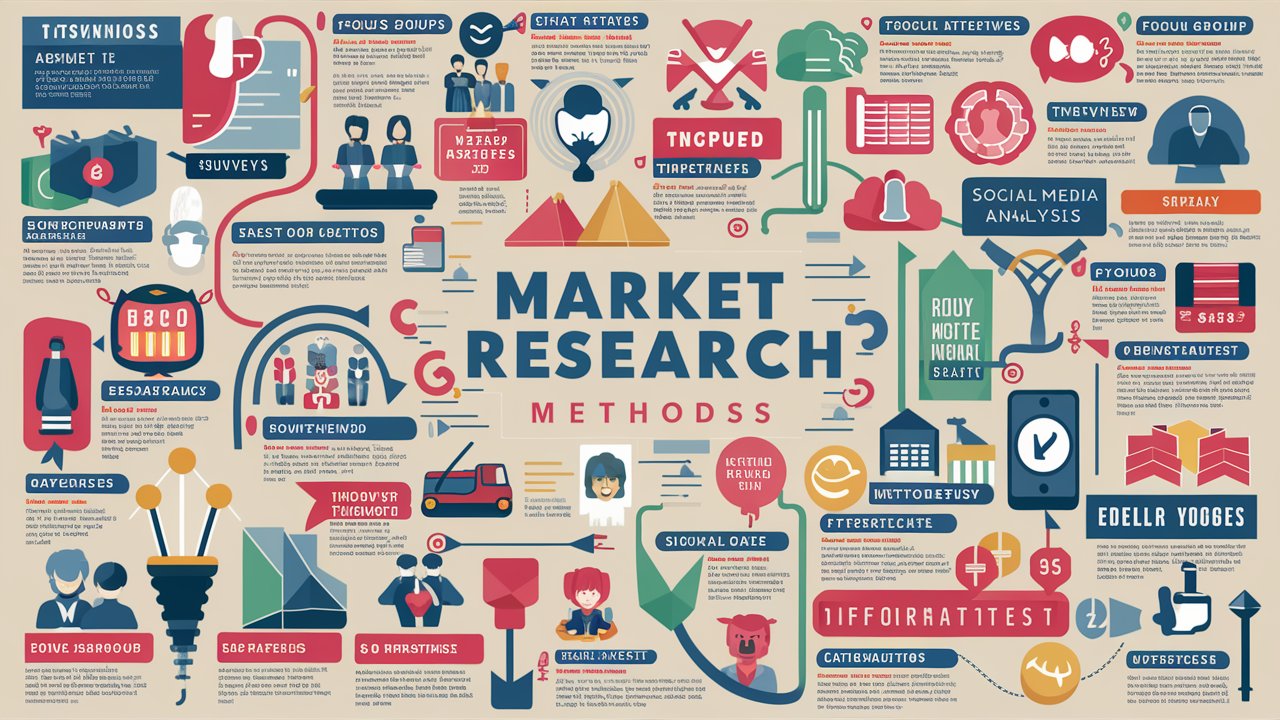
Market research methods form the foundation of informed business decision-making. In an increasingly competitive marketplace, understanding consumer behavior, market trends, and industry dynamics is essential for sustainable growth. Businesses rely on both primary and secondary market research to gather valuable insights that guide product development, marketing strategies, and customer engagement. By combining qualitative and quantitative research methods, organizations can uncover not only what consumers do but also why they do it. This comprehensive guide explores the various market research methods, data collection techniques, and market analysis strategies that help businesses make evidence-based decisions and maintain a competitive edge.
Understanding Market Research
Market research is the systematic process of collecting, analyzing, and interpreting data about a target market, consumers, competitors, and the overall industry environment. It helps businesses identify opportunities, minimize risks, and optimize marketing efforts. The two main categories of market research are primary and secondary research. Primary market research involves gathering new data directly from sources such as customers, focus groups, or surveys. Secondary market research, on the other hand, uses existing data from reports, publications, and databases to draw insights. Both approaches are essential for developing a comprehensive understanding of market conditions and consumer preferences.
Primary Market Research
Primary market research focuses on collecting original data tailored to specific business objectives. This method allows companies to obtain firsthand insights directly from their target audience. Common data collection methods include surveys, interviews, focus groups, and observations. Surveys are widely used for quantitative research, providing measurable data on customer satisfaction, preferences, and purchasing behavior. Interviews and focus groups, often used in qualitative research, offer deeper insights into consumer motivations and perceptions. The advantage of primary research lies in its accuracy and relevance, as the data is collected specifically for the research purpose. However, it can be time-consuming and costly, requiring careful planning and execution.
Secondary Market Research
Secondary market research involves analyzing data that has already been collected by other organizations, institutions, or researchers. This type of research is cost-effective and time-efficient, as it leverages existing information from sources such as government reports, industry publications, academic studies, and online databases. Secondary research is particularly useful for understanding market trends, competitor performance, and industry benchmarks. While it may not provide the same level of specificity as primary research, it offers valuable context and background information that supports strategic decision-making. Combining secondary data with primary research results often yields a more comprehensive market analysis.
Qualitative Research Methods
Qualitative research methods aim to explore the underlying reasons, opinions, and motivations behind consumer behavior. These methods are particularly useful for understanding emotional and psychological factors that influence purchasing decisions. Techniques such as in-depth interviews, focus groups, and ethnographic studies allow researchers to gather detailed, descriptive data. Unlike quantitative research, which focuses on numerical analysis, qualitative research emphasizes interpretation and meaning. It helps businesses uncover insights that cannot be captured through statistics alone, such as brand perception, customer satisfaction drivers, and product usability feedback. Qualitative research is essential for developing customer-centric strategies and improving user experiences.
Quantitative Research Methods
Quantitative research methods focus on collecting numerical data that can be statistically analyzed to identify patterns and trends. Common techniques include surveys, experiments, and observational studies. These methods are ideal for measuring variables such as market size, customer demographics, and purchase frequency. Quantitative research provides objective, measurable results that can be used to validate hypotheses and support data-driven decisions. For example, a company might use quantitative research to determine the percentage of consumers who prefer a specific product feature or price point. When combined with qualitative insights, quantitative data enhances the accuracy and depth of market analysis.

Consumer Research Techniques
Consumer research techniques are designed to understand the needs, preferences, and behaviors of target audiences. Businesses use these techniques to identify market opportunities, improve customer satisfaction, and enhance brand loyalty. Common consumer research methods include customer satisfaction surveys, product testing, and social media analysis. Behavioral tracking tools, such as website analytics and purchase history data, also provide valuable insights into consumer habits. By applying both qualitative and quantitative approaches, companies can develop a holistic view of their customers. This understanding enables them to tailor marketing messages, refine product offerings, and strengthen customer relationships.
Data Collection Methods
Effective data collection methods are critical to the success of any market research project. The choice of method depends on the research objectives, target audience, and available resources. Common data collection techniques include online surveys, telephone interviews, face-to-face interviews, and observational studies. Online surveys are cost-effective and can reach a large audience quickly, while interviews provide deeper insights through direct interaction. Observational studies allow researchers to analyze real-world behavior without influencing participants. Regardless of the method used, ensuring data accuracy, reliability, and ethical compliance is essential for credible research outcomes.
Market Analysis Strategies
Market analysis strategies involve interpreting collected data to identify trends, opportunities, and potential challenges. Businesses use various analytical tools and frameworks, such as SWOT analysis, PEST analysis, and Porter’s Five Forces, to evaluate market conditions. These strategies help organizations understand competitive dynamics, assess market potential, and forecast future demand. Data visualization tools and statistical software further enhance the ability to interpret complex datasets. A well-executed market analysis provides actionable insights that guide strategic planning, product development, and marketing campaigns. By continuously monitoring market changes, businesses can adapt quickly and maintain a competitive advantage.
Conclusion
Market research methods are indispensable tools for businesses seeking to understand their markets and customers. By combining primary and secondary research with qualitative and quantitative approaches, organizations can gather comprehensive insights that drive informed decision-making. Effective consumer research techniques and data collection methods ensure that businesses remain responsive to evolving customer needs. Market analysis strategies transform raw data into actionable intelligence, enabling companies to anticipate trends and seize opportunities. In a data-driven world, mastering market research methods is essential for achieving long-term business success and sustainable growth.
Frequently Asked Questions (FAQ)
1. What is the difference between primary and secondary market research?
Primary market research involves collecting new, original data directly from sources such as customers or focus groups. Secondary market research uses existing data from reports, studies, and databases to analyze market trends and conditions.
2. Why are qualitative research methods important?
Qualitative research methods provide deep insights into consumer motivations, attitudes, and perceptions. They help businesses understand the emotional and psychological factors that influence purchasing decisions.
3. What are some common quantitative research methods?
Common quantitative research methods include surveys, experiments, and observational studies. These methods collect numerical data that can be statistically analyzed to identify patterns and trends.
4. How do businesses use consumer research techniques?
Businesses use consumer research techniques to understand customer needs, preferences, and behaviors. This information helps improve products, refine marketing strategies, and enhance customer satisfaction.
5. What are effective data collection methods in market research?
Effective data collection methods include online surveys, interviews, focus groups, and observational studies. The choice of method depends on research goals, target audience, and available resources.
6. How do market analysis strategies benefit businesses?
Market analysis strategies help businesses interpret data, identify opportunities, and anticipate challenges. They support strategic planning, product development, and competitive positioning.
7. Can qualitative and quantitative research be combined?
Yes, combining qualitative and quantitative research provides a more comprehensive understanding of the market. Qualitative insights explain the reasons behind behaviors, while quantitative data measures their extent and frequency.