
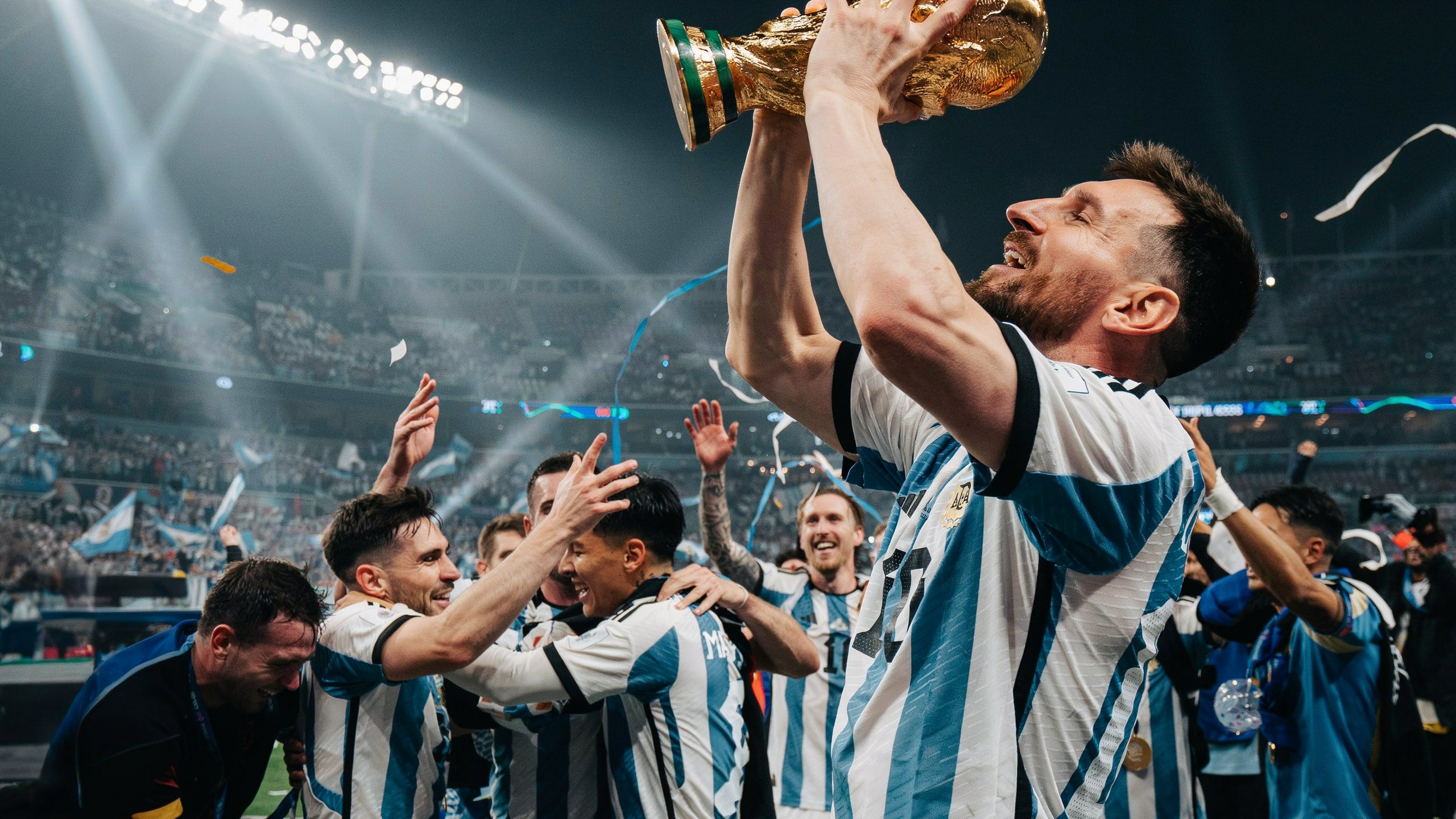
The story of Lionel Messi and the World Cup is one of perseverance, heartbreak, and ultimate triumph. For nearly two decades, Messi carried the hopes of Argentina on his shoulders, chasing the one trophy that had eluded him—the FIFA World Cup. His journey from a young prodigy in 2006 to a world champion in 2022 is not just a tale of football excellence but also of emotional resilience and national pride. When Messi finally lifted the World Cup trophy in Qatar, it was more than a personal victory; it was a moment that united millions of fans around the world and solidified his status as one of the greatest players in football history.
This article explores Messi’s World Cup journey, his reflections on the tournament, the emotions behind his triumph, and how his 2022 victory redefined his legacy forever.
Messi’s Early World Cup Appearances: The Beginning of a Dream
Lionel Messi’s World Cup journey began in 2006 when he made his debut for Argentina at just 18 years old. The young forward, already dazzling fans at FC Barcelona, entered the global stage with immense expectations. Although Argentina showed promise in that tournament, they were eliminated in the quarterfinals by Germany. For Messi, it was a learning experience—a glimpse of the immense pressure and passion that comes with representing his country on football’s biggest stage.
In 2010, under coach Diego Maradona, Messi returned to the World Cup as Argentina’s star player. Despite his brilliance, Argentina once again fell to Germany in the quarterfinals. The disappointment was palpable, and critics began questioning whether Messi could replicate his club success with the national team. Yet, even in defeat, Messi’s determination grew stronger. He often spoke about how much it meant to wear the Argentina shirt, emphasizing that winning the World Cup was his ultimate dream.
The 2014 World Cup: So Close, Yet So Far
The 2014 FIFA World Cup in Brazil marked a turning point in Messi’s international career. Leading Argentina as captain, he delivered a series of outstanding performances, scoring crucial goals and guiding his team to the final. The world watched as Messi carried Argentina through tense matches, including a dramatic semifinal win over the Netherlands.
In the final against Germany, Messi had moments of brilliance but couldn’t find the decisive goal. A late strike from Mario Götze sealed Argentina’s heartbreak, and Messi was left devastated. Despite being awarded the Golden Ball as the tournament’s best player, the loss overshadowed the achievement. In post-match interviews, Messi expressed deep disappointment, saying that individual awards meant little without the World Cup trophy.
That night in Rio de Janeiro, Messi’s tears became symbolic of Argentina’s pain. Yet, his humility and grace in defeat earned him admiration worldwide. The 2014 World Cup cemented Messi’s reputation as a leader and a fighter, even in the face of crushing disappointment.
The Struggles and Setbacks: 2018 and the Weight of Expectation
By the time the 2018 World Cup in Russia arrived, Messi was under immense pressure. Argentina’s qualification campaign had been turbulent, and expectations were sky-high. The team struggled in the group stage, narrowly advancing after a dramatic goal from Marcos Rojo against Nigeria.
In the Round of 16, Argentina faced France in a thrilling match that ended 4–3 in favor of the eventual champions. Messi provided two assists but couldn’t prevent another early exit. The defeat reignited debates about whether Messi would ever win the World Cup. Many speculated that 2018 might have been his last chance.
After the tournament, Messi took a brief break from international football, reflecting on his future. In interviews, he admitted that the constant criticism and pressure were difficult to bear but reaffirmed his love for Argentina and his desire to keep fighting for his country. His resilience and loyalty became defining traits of his career.
The 2022 World Cup: The Ultimate Redemption
The 2022 FIFA World Cup in Qatar was Messi’s final opportunity to fulfill his lifelong dream. At 35 years old, he entered the tournament as captain and leader of a rejuvenated Argentina squad. The team’s opening match ended in a shocking 2–1 defeat to Saudi Arabia, sparking doubts about their chances. But Messi’s leadership and calm presence turned the tide.
In the following matches, Messi inspired Argentina with his brilliance—scoring against Mexico, assisting teammates, and leading by example. His performances in the knockout stages were nothing short of legendary. Against the Netherlands in the quarterfinals, he delivered a masterclass, scoring and assisting in a tense match that ended in a penalty shootout victory. In the semifinal against Croatia, Messi’s mesmerizing dribble and assist to Julián Álvarez became one of the tournament’s defining moments.
The final against France was an instant classic. Messi scored twice, including a penalty in regular time and another in the shootout. Argentina triumphed 4–2 on penalties after a 3–3 draw, and Messi finally lifted the World Cup trophy. The image of Messi holding the golden trophy aloft, surrounded by his teammates, became one of the most iconic moments in sports history.
After the match, Messi described the victory as “the most beautiful thing” in his career. He spoke about how he had dreamed of this moment since childhood and how grateful he was to share it with his family, teammates, and fans. His words reflected humility, joy, and fulfillment—the emotions of a man who had finally conquered his greatest challenge.
Messi’s Legacy After the World Cup
Winning the 2022 World Cup elevated Messi’s legacy to unparalleled heights. For years, debates raged about who was the greatest footballer of all time—Messi or Cristiano Ronaldo. With the World Cup triumph, many fans and experts declared the debate settled. Messi had achieved everything possible in football: multiple Ballon d’Or awards, Champions League titles, Copa América glory, and now the World Cup.
Beyond statistics, Messi’s World Cup victory symbolized perseverance and passion. His journey inspired millions who saw in him the embodiment of dedication and humility. In Argentina, the celebrations lasted for days, with millions flooding the streets to honor their hero. Around the world, fans recognized that they had witnessed the completion of a football fairytale.
Messi’s reflections after the tournament revealed his deep emotional connection to the game. He expressed gratitude to his teammates, coaches, and supporters, emphasizing that the victory belonged to everyone who believed in him. His story became a testament to the idea that greatness is not just about talent but also about resilience, teamwork, and heart.
Conclusion
The story of Messi and the World Cup is one of destiny fulfilled. From the heartbreaks of 2014 and 2018 to the glory of 2022, Messi’s journey represents the essence of sport—the pursuit of excellence, the pain of defeat, and the joy of ultimate triumph. His World Cup victory in Qatar was not just a personal achievement but a moment that united the world in admiration.
For Argentina, it was the return of glory after 36 years. For Messi, it was the crowning moment of a career defined by brilliance and humility. And for football fans everywhere, it was a reminder that dreams, no matter how distant, can come true with perseverance and passion.
Frequently Asked Questions (FAQ)
1. How many World Cups has Lionel Messi played in?
Messi has played in five FIFA World Cups—2006, 2010, 2014, 2018, and 2022.
2. Did Messi win the World Cup?
Yes, Messi won the FIFA World Cup in 2022 with Argentina, defeating France in the final.
3. How many goals did Messi score in the 2022 World Cup?
Messi scored seven goals in the 2022 World Cup, finishing as one of the tournament’s top scorers.
4. What did Messi say after winning the World Cup?
Messi described the victory as “the most beautiful thing” in his career and expressed gratitude to his teammates, family, and fans.
5. How did Messi perform in the 2014 World Cup?
Messi led Argentina to the final in 2014, won the Golden Ball as the tournament’s best player, but lost to Germany 1–0.
6. Will Messi play in the 2026 World Cup?
As of now, Messi has not confirmed whether he will play in the 2026 World Cup, though he continues to represent Argentina in international matches.
7. Why is Messi’s 2022 World Cup win so significant?
It completed his career achievements, cementing his status as one of the greatest footballers in history and fulfilling a lifelong dream for himself and Argentina.