
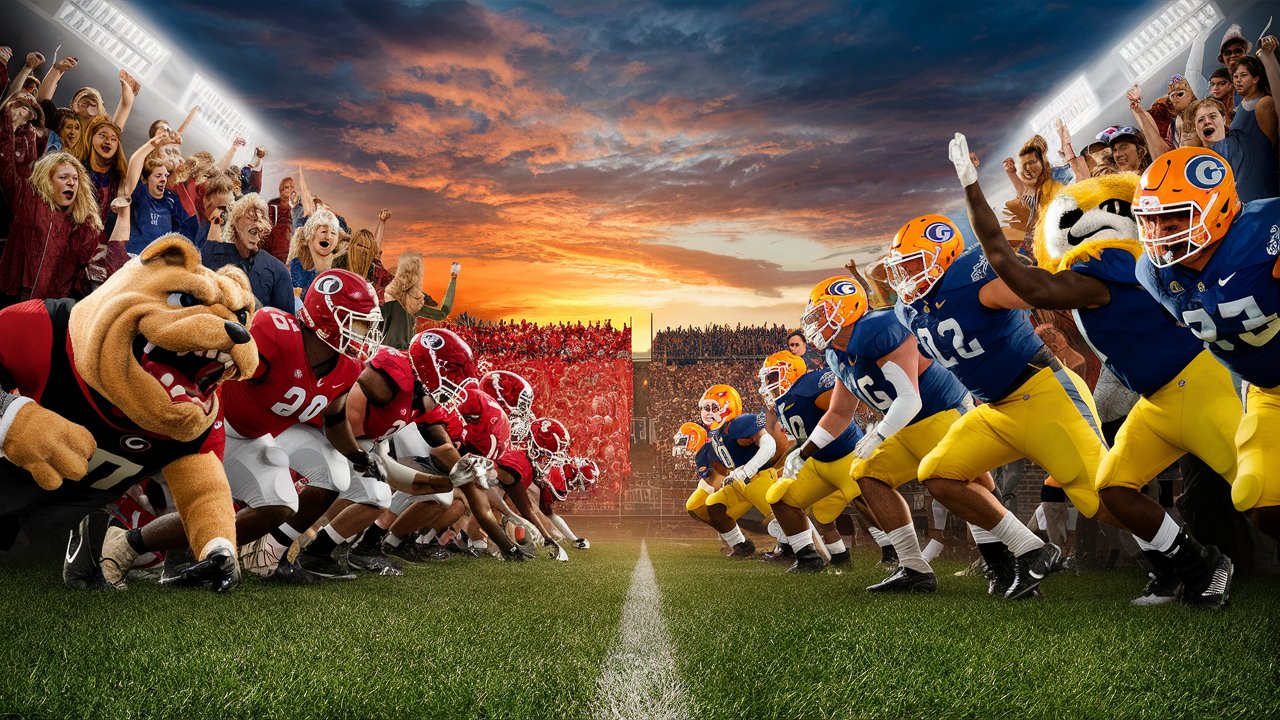
The rivalry between the University of Georgia (UGA) Bulldogs and the Georgia Institute of Technology (Georgia Tech) Yellow Jackets is one of the most storied matchups in college football history. Known as “Clean, Old-Fashioned Hate,” this fierce competition has been a defining part of Southern football culture for over a century. The Georgia vs Georgia Tech rivalry extends beyond the football field, representing a clash of academic excellence, athletic pride, and state identity. Fans from both sides eagerly anticipate this annual showdown, which often determines bragging rights across the state of Georgia.
The History of the Georgia vs Georgia Tech Rivalry
The Georgia vs Georgia Tech rivalry began in 1893, making it one of the oldest rivalries in college football. The first game was played in Atlanta, where Georgia Tech defeated Georgia 28–6. Since then, the two teams have met over 115 times, with the University of Georgia holding the overall series lead. The rivalry has seen periods of dominance from both programs, with Georgia Tech controlling the early years and Georgia asserting its superiority in the modern era. The intensity of this matchup has only grown with time, fueled by passionate fan bases and unforgettable moments that have shaped the legacy of both schools.
Georgia Bulldogs: Powerhouse of the SEC
The University of Georgia Bulldogs, representing the Southeastern Conference (SEC), have built a reputation as one of the most dominant programs in college football. Known for their physical defense, explosive offense, and consistent national championship contention, the Bulldogs have produced numerous NFL stars and Heisman Trophy contenders. Under the leadership of legendary coaches like Vince Dooley and Kirby Smart, Georgia has maintained a tradition of excellence that extends beyond the gridiron. The Bulldogs’ success in the SEC has made them a national powerhouse, and their victories over Georgia Tech often serve as a statement of their dominance in the state.
Georgia Tech Yellow Jackets: Pride of the ACC
Georgia Tech, a member of the Atlantic Coast Conference (ACC), has a proud football tradition rooted in innovation and resilience. The Yellow Jackets have produced several national championships and have been home to iconic coaches such as John Heisman, Bobby Dodd, and Paul Johnson. Known for their unique offensive schemes and disciplined play, Georgia Tech has often been the underdog in the rivalry but has delivered stunning upsets that remain etched in college football history. The program’s emphasis on academic excellence and athletic integrity makes Georgia Tech a respected competitor both on and off the field.
Key Moments in the Georgia vs Georgia Tech Rivalry
Throughout the decades, the Georgia vs Georgia Tech rivalry has produced unforgettable moments that define college football in the South. One of the most famous games occurred in 1942 when Georgia’s Frank Sinkwich led the Bulldogs to a decisive victory en route to a national championship. In 1999, Georgia Tech stunned Georgia in overtime, reigniting the rivalry’s intensity. More recently, Georgia’s dominance under Kirby Smart has reestablished the Bulldogs as the superior program, but the Yellow Jackets continue to fight for redemption. Each game adds a new chapter to this historic rivalry, keeping fans on edge and emotions high.
The Cultural Impact of Georgia vs Georgia Tech
Beyond football, the Georgia vs Georgia Tech rivalry symbolizes the cultural divide between two distinct institutions. The University of Georgia, located in Athens, is known for its vibrant campus life, strong athletic programs, and passionate fan base. Georgia Tech, based in Atlanta, represents academic rigor, technological innovation, and a more urban identity. This contrast fuels the rivalry, as alumni and fans from both schools take immense pride in their respective traditions. The annual matchup is more than a game—it’s a celebration of Georgia’s rich heritage, uniting communities while dividing loyalties.
Georgia vs Georgia Tech: The Future of the Rivalry
As college football evolves with conference realignments and playoff expansions, the Georgia vs Georgia Tech rivalry remains a cornerstone of tradition. Despite being in different conferences, both programs are committed to preserving this annual matchup. The future promises renewed competition as Georgia Tech rebuilds its program and Georgia continues its pursuit of national titles. The rivalry’s endurance reflects the deep-rooted passion of fans and the significance of college football in the state of Georgia.
Conclusion
The Georgia vs Georgia Tech rivalry is more than just a football game—it’s a century-old tradition that embodies pride, passion, and perseverance. From historic victories to heartbreaking losses, this matchup has shaped the identity of both universities and their supporters. Whether it’s the Bulldogs’ dominance or the Yellow Jackets’ resilience, the spirit of “Clean, Old-Fashioned Hate” continues to captivate fans year after year. As the rivalry moves forward, it remains a defining symbol of Georgia’s love for college football and the enduring power of competition.
FAQs
1. When did the Georgia vs Georgia Tech rivalry begin?
The rivalry began in 1893, with Georgia Tech winning the first game 28–6.
2. What is the nickname for the Georgia vs Georgia Tech rivalry?
The rivalry is famously known as “Clean, Old-Fashioned Hate.”
3. Which team leads the all-time series?
The University of Georgia Bulldogs lead the all-time series against Georgia Tech.
4. Why is the rivalry so intense?
The rivalry’s intensity stems from state pride, historical competition, and the contrasting cultures of the two universities.
5. How often do Georgia and Georgia Tech play each other?
The two teams meet annually, typically during the final week of the regular college football season.
6. What conferences do Georgia and Georgia Tech belong to?
Georgia competes in the Southeastern Conference (SEC), while Georgia Tech is a member of the Atlantic Coast Conference (ACC).
7. What makes the Georgia vs Georgia Tech rivalry unique?
Its longevity, cultural significance, and balance of academic and athletic excellence make it one of the most unique rivalries in college football.