
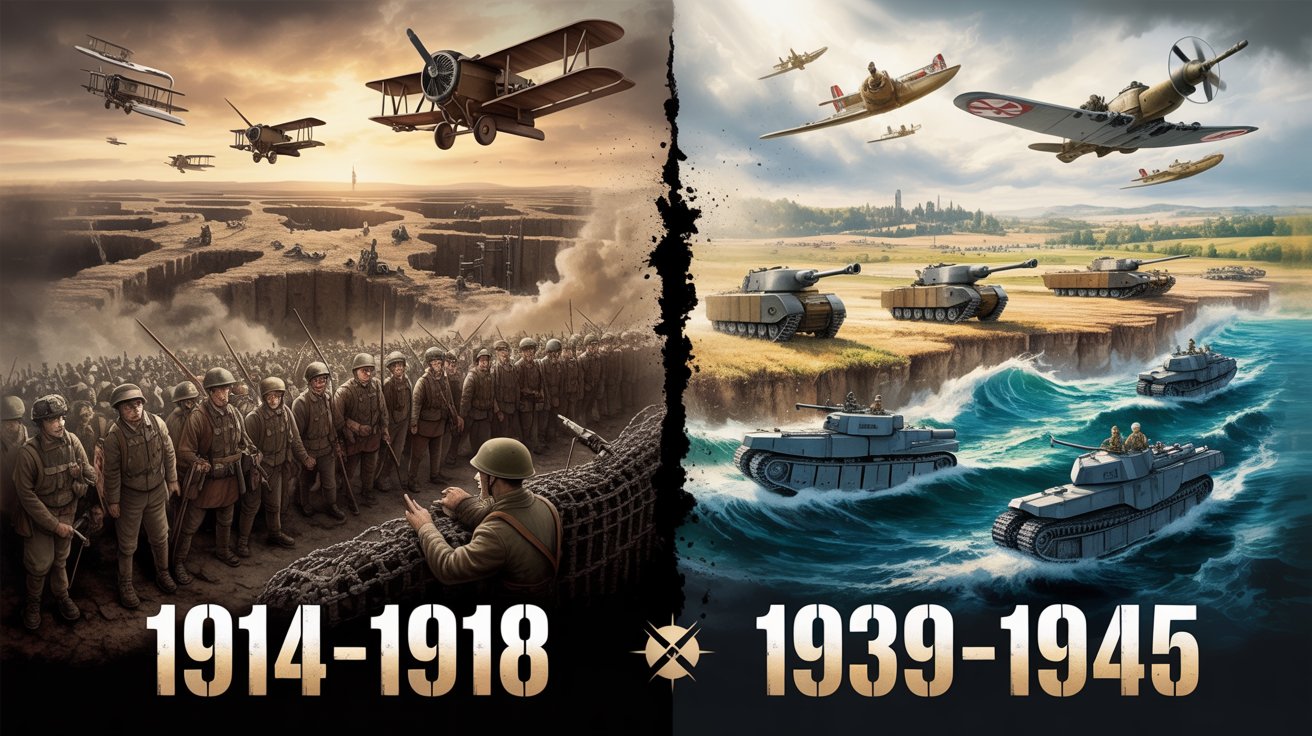
The twentieth century was shaped by two of the most devastating conflicts in human history—World War I and World War II. These global wars not only redrew political boundaries but also transformed societies, economies, and international relations. Understanding the causes, events, and consequences of both wars is essential to grasp how the modern world evolved. This article provides a comprehensive overview of World War I and II, exploring their origins, major battles, key figures, and lasting impacts on global civilization.
1. Causes of World War I
World War I, also known as the Great War, began in 1914 and lasted until 1918. The immediate cause was the assassination of Archduke Franz Ferdinand of Austria-Hungary, but the underlying reasons were far more complex. Nationalism, militarism, imperial rivalries, and a tangled web of alliances created a volatile environment in Europe. The major powers—Germany, Austria-Hungary, the Ottoman Empire, and Bulgaria—formed the Central Powers, while the Allies included Britain, France, Russia, Italy, and later the United States. The war was fueled by competition for colonies, arms races, and the desire for dominance among European empires.
2. Major Events and Battles of World War I
World War I introduced new forms of warfare, including trench warfare, chemical weapons, and large-scale use of machine guns. The Western Front, stretching across France and Belgium, became a deadly stalemate where millions of soldiers perished. Key battles such as the Battle of the Somme, Battle of Verdun, and Battle of Gallipoli demonstrated the immense human cost of the conflict. The entry of the United States in 1917 shifted the balance in favor of the Allies. The war ended with the signing of the Treaty of Versailles in 1919, which imposed heavy reparations on Germany and redrew the map of Europe.
3. Consequences of World War I
The aftermath of World War I was marked by political upheaval, economic hardship, and social change. The Austro-Hungarian, Ottoman, German, and Russian empires collapsed, leading to the creation of new nations. The League of Nations was established to prevent future conflicts, though it ultimately failed to maintain peace. The harsh terms of the Treaty of Versailles sowed resentment in Germany, setting the stage for the rise of Adolf Hitler and the outbreak of World War II two decades later. The war also accelerated technological innovation and changed the role of women in society as they entered the workforce in large numbers.
4. Causes of World War II
World War II, which lasted from 1939 to 1945, was a direct consequence of unresolved issues from World War I. The rise of totalitarian regimes in Germany, Italy, and Japan fueled aggression and expansionism. Hitler’s invasion of Poland in September 1939 triggered the war, as Britain and France declared war on Germany. The Axis Powers—Germany, Italy, and Japan—sought to dominate Europe and Asia, while the Allied Powers, including Britain, the Soviet Union, China, and the United States, fought to stop them. Economic depression, nationalism, and the failure of appeasement policies all contributed to the outbreak of the second global conflict.
5. Major Events and Turning Points of World War II
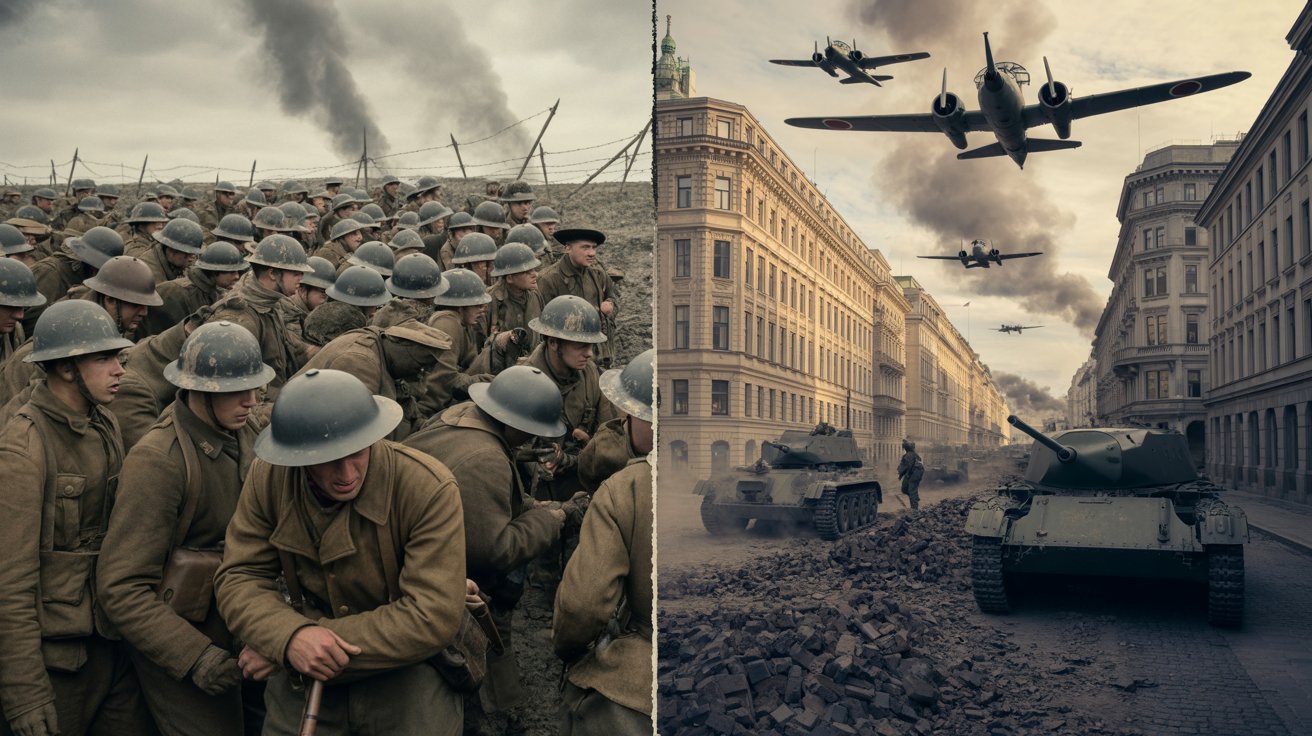
World War II was fought across Europe, Africa, Asia, and the Pacific, making it the most widespread war in history. Early victories by the Axis Powers gave way to major turning points such as the Battle of Stalingrad, D-Day (Normandy Invasion), and the Battle of Midway. The war also witnessed horrific atrocities, including the Holocaust, in which six million Jews and millions of others were systematically murdered. The conflict ended after the Allied forces defeated Nazi Germany in May 1945 and the United States dropped atomic bombs on Hiroshima and Nagasaki in August 1945, forcing Japan’s surrender.
6. Consequences and Global Impact of World War II
The consequences of World War II were profound and far-reaching. Over 70 million people died, and much of Europe and Asia lay in ruins. The war led to the emergence of the United States and the Soviet Union as superpowers, marking the beginning of the Cold War. The United Nations was established in 1945 to promote peace and prevent future conflicts. Decolonization movements gained momentum as former colonies sought independence. The war also spurred technological advancements in medicine, aviation, and nuclear energy, reshaping the modern world in unprecedented ways.
7. Comparing World War I and World War II
While both wars were global in scale, they differed in causes, strategies, and outcomes. World War I was largely a conflict of empires driven by alliances and territorial ambitions, whereas World War II was ideologically driven, pitting democracy against fascism and totalitarianism. The first war introduced mechanized warfare, while the second brought about nuclear weapons and mass civilian casualties. Both wars, however, demonstrated the devastating consequences of unchecked aggression and the importance of international cooperation in maintaining peace.
8. Lessons Learned from the World Wars
The legacy of World Wars I and II continues to influence global politics and diplomacy. The wars taught the world the necessity of collective security, human rights, and international institutions. They also highlighted the dangers of nationalism, militarism, and economic inequality. Modern peacekeeping efforts, global alliances like NATO, and international laws against war crimes all stem from the lessons learned during these conflicts. Remembering the sacrifices made during the world wars serves as a reminder of the value of peace and the cost of war.
Conclusion
The story of World Wars I and II is a story of human endurance, tragedy, and transformation. These two monumental conflicts reshaped the world politically, economically, and socially. They gave rise to new nations, ideologies, and global institutions that continue to shape international relations today. Understanding the causes, events, and consequences of both wars is essential not only for historians but for all who seek to prevent such devastation in the future. The legacy of the world wars reminds humanity of the importance of unity, diplomacy, and the pursuit of lasting peace.
Frequently Asked Questions (FAQ)
1. What caused World War I?
World War I was caused by nationalism, militarism, imperial rivalries, and a complex system of alliances, with the assassination of Archduke Franz Ferdinand serving as the immediate trigger.
2. What were the main causes of World War II?
World War II was caused by unresolved issues from World War I, the rise of totalitarian regimes, economic depression, and aggressive expansion by Germany, Italy, and Japan.
3. How did World War I end?
World War I ended in 1918 with the signing of the Armistice and the Treaty of Versailles in 1919, which imposed heavy penalties on Germany.
4. How did World War II end?
World War II ended in 1945 after the unconditional surrender of Germany in May and Japan in August following the atomic bombings of Hiroshima and Nagasaki.
5. What were the major differences between World War I and World War II?
World War I was primarily fought in Europe with trench warfare, while World War II was a global conflict involving advanced technology, air power, and nuclear weapons.
6. What were the global impacts of the world wars?
Both wars led to massive loss of life, economic devastation, the rise of new superpowers, the creation of the United Nations, and the beginning of the Cold War.
7. Why are World Wars I and II important to study today?
Studying the world wars helps understand the causes of global conflict, the importance of peacekeeping, and the need for international cooperation to prevent future wars.