
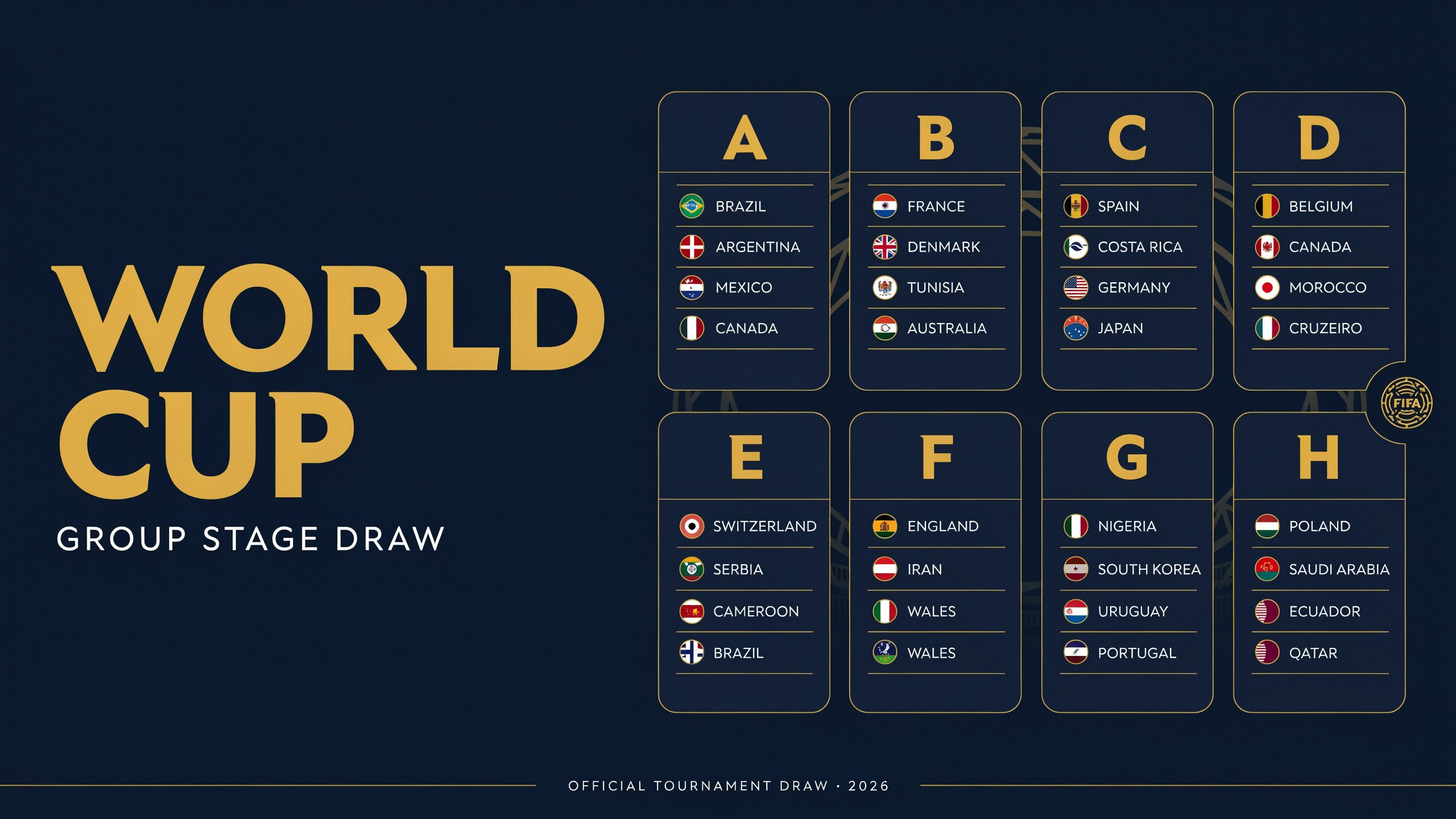
The groups of the World Cup represent one of the most exciting and strategic phases of the tournament, where nations from every continent compete to advance to the knockout rounds. Every four years, the FIFA World Cup brings together 32 of the best national teams (soon to be 48 in future editions) to battle for football’s most prestigious trophy. The group stage is where dreams are born, underdogs rise, and footballing giants sometimes fall. Understanding how the World Cup groups are formed, how teams qualify, and what strategies they employ is essential for fans, analysts, and bettors alike.
This article provides a comprehensive look at the groups of the World Cup, including how they are drawn, the historical significance of the group stage, key teams to watch, and predictions for future tournaments. It also explores how the group format has evolved over time and what it means for global football competition.
The Structure of the World Cup Groups
The FIFA World Cup group stage is the foundation of the tournament’s format. Traditionally, 32 teams are divided into eight groups (A to H), each containing four teams. Every team plays three matches—one against each group opponent. The top two teams from each group advance to the Round of 16, based on points accumulated (three for a win, one for a draw, and none for a loss).
The group stage is designed to ensure fairness and global representation. Teams from the same confederation, except for Europe, are usually kept apart in the draw to promote diversity. The draw itself is a highly anticipated event, watched by millions worldwide, as it determines the path each nation must take to reach the final.
In the upcoming 2026 FIFA World Cup, the format will expand to 48 teams, divided into 12 groups of four. This change aims to increase participation and global reach, allowing more nations to experience the thrill of the World Cup. However, it also introduces new challenges in scheduling, logistics, and competitive balance.
How the World Cup Draw Works
The World Cup group draw is a meticulous process that combines ranking, geography, and chance. Teams are seeded based on the FIFA World Rankings, ensuring that the strongest teams are distributed evenly across groups. The draw is conducted using four pots, with each pot containing teams of similar ranking.
For example, Pot 1 typically includes the host nation and the top-ranked teams, while Pot 4 contains lower-ranked qualifiers. During the draw, one team from each pot is placed into each group, ensuring a balanced mix of footballing styles and strengths.
This process often leads to intriguing matchups, such as traditional powerhouses facing emerging nations. The draw can also create “Groups of Death,” where multiple strong teams are placed together, making qualification extremely competitive. These groups often produce some of the most memorable matches in World Cup history.
Historical Overview of World Cup Groups
Since the first World Cup in 1930, the group stage has evolved significantly. Early tournaments featured fewer teams and simpler formats, but as football’s popularity grew, so did the number of participants. By 1998, the tournament had expanded to 32 teams, a format that has remained until now.
Throughout history, the group stage has produced unforgettable moments. In 1982, Algeria shocked the world by defeating West Germany, though they were controversially eliminated due to the infamous “Disgrace of Gijón.” In 2002, Senegal stunned defending champions France in the opening match, signaling the rise of African football. More recently, in 2018, Germany’s early exit from the group stage demonstrated that even the strongest teams are not immune to surprises.
These stories highlight the unpredictable nature of the groups of the World Cup, where every match carries immense pressure and every goal can change a nation’s destiny.
Key Teams and Group Stage Strategies
The group stage of the World Cup is not just about talent—it’s about strategy, adaptability, and mental strength. Teams approach the group phase differently depending on their objectives and opponents.
Top-tier nations like Brazil, France, and Argentina often focus on asserting dominance early, using attacking football to secure quick qualification. Meanwhile, underdogs such as Morocco, Japan, or Costa Rica rely on defensive organization, counterattacks, and set pieces to surprise stronger opponents.
Coaches play a crucial role in managing squad rotation, especially in tournaments with tight schedules. A single tactical decision—such as resting key players or changing formations—can determine whether a team advances or exits early. The groups of the World Cup thus become a chessboard of tactical battles, where preparation and adaptability are as important as skill.
Memorable Groups in World Cup History
Several World Cup groups have become legendary due to their competitiveness and drama. The 2014 “Group of Death” featuring Germany, Portugal, Ghana, and the United States was one of the most balanced in recent memory. Germany eventually went on to win the tournament, but every match in that group was fiercely contested.
In 2010, Group G included Brazil, Portugal, Ivory Coast, and North Korea—another example of how diverse footballing cultures can collide on the world stage. The 2022 World Cup also delivered surprises, with Japan topping a group that included Spain and Germany, proving that no team can be underestimated.
These examples show that the groups of the World Cup are where legends are made and where football’s unpredictability shines brightest.
The Future of World Cup Groups
The expansion to 48 teams in 2026 will redefine the World Cup group stage. With more nations participating, fans can expect new rivalries, more diverse representation, and increased global engagement. However, this change also raises questions about competitive balance and tournament length.
FIFA’s decision to maintain groups of four ensures that the traditional format—where every match matters—remains intact. The larger pool of teams will allow emerging football nations from Asia, Africa, and North America to showcase their talent on the biggest stage. This evolution reflects football’s growing inclusivity and the sport’s universal appeal.
As the tournament evolves, the groups of the World Cup will continue to serve as the heartbeat of the competition, setting the stage for the drama and glory that define the beautiful game.
Conclusion
The groups of the World Cup are more than just the opening phase of a tournament—they are the foundation upon which champions are built. From the excitement of the draw to the tension of the final group matches, this stage captures the essence of global football: diversity, competition, and passion.
Every World Cup group tells a story—of triumph, heartbreak, and national pride. Whether it’s a powerhouse asserting dominance or an underdog defying the odds, the group stage embodies the unpredictability that makes football the world’s most beloved sport. As the format evolves and new nations join the global stage, the groups of the World Cup will continue to inspire fans and shape the future of international football.
FAQs
1. How are the groups of the World Cup decided?
The groups are determined through a draw based on FIFA rankings and geographic distribution to ensure balance and diversity.
2. How many teams are in each World Cup group?
Traditionally, each group contains four teams, but starting from 2026, there will be 12 groups of four teams each.
3. What is the “Group of Death” in the World Cup?
The “Group of Death” refers to a particularly competitive group where multiple strong teams are drawn together, making qualification difficult.
4. How do teams advance from the group stage?
The top two teams from each group advance to the knockout rounds based on points, goal difference, and other tiebreakers.
5. Why is the group stage important in the World Cup?
It sets the tone for the tournament, determines early favorites, and often produces some of the most memorable matches in World Cup history.